By: Abdul Basit Khawaja
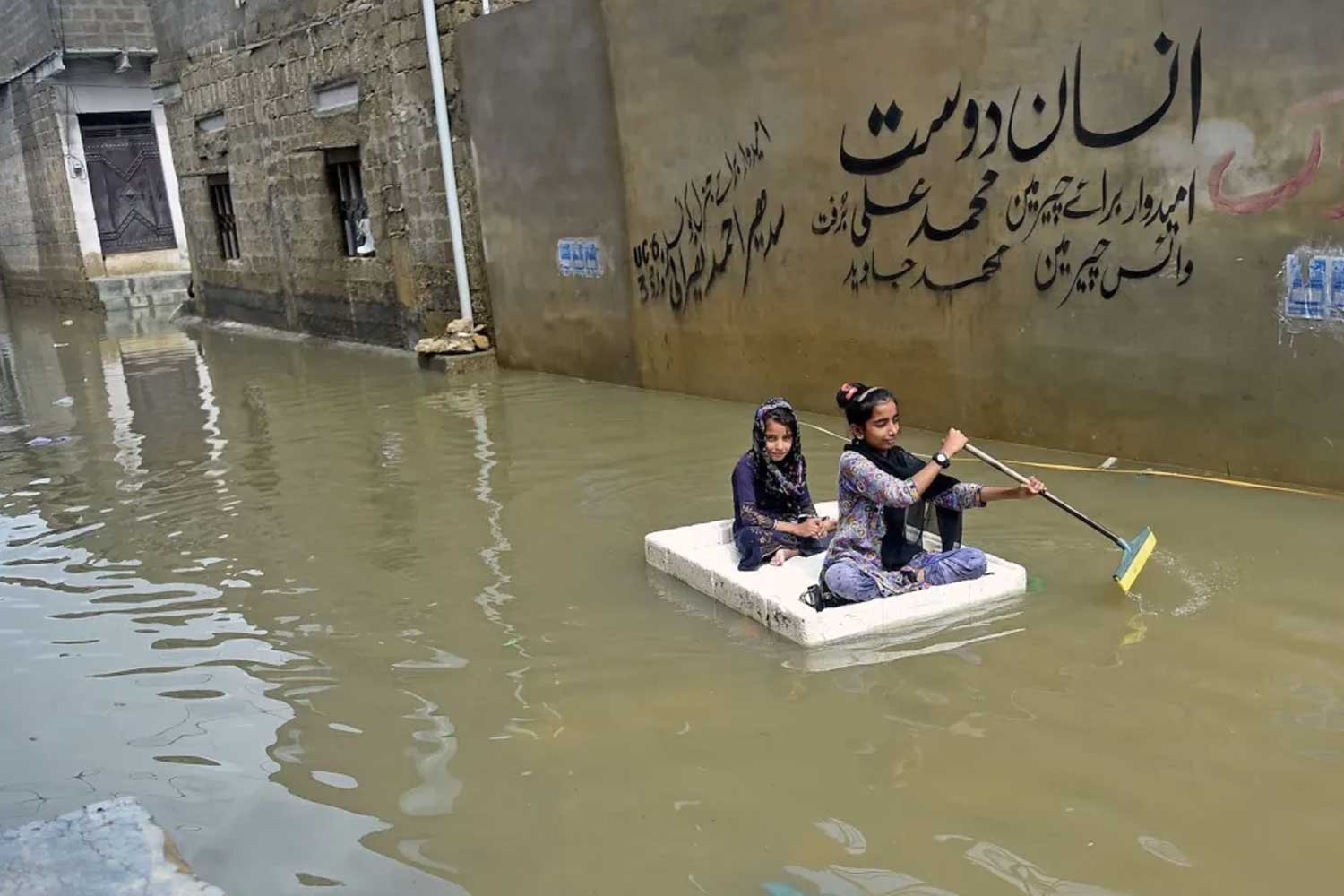
One year has passed since unprecedented floods wreaked havoc in Pakistan, leaving hundreds of thousands of families in desperate need of humanitarian assistance and access to essential services. Among the hardest-hit districts were those already grappling with under development, high malnutrition rates, poor water and sanitation access, and low school enrollment. The aftermath witnessed the loss of vital infrastructure, including thousands of houses, schools and public health facilities, exacerbating pre-existing inequities and putting the vulnerable, especially the children at even greater risk of hunger and disease.
Sirat Al Mustaqim Welfare Foundation, stands shoulder to shoulder with its partners since the onset of the emergency response, remains steadfast in its commitment to supporting families still grappling with the aftermath of the devastation.
The Impact of the 2022 Floods
The 2022 floods submerged one-third of Pakistan, affecting a staggering 33 million people, with children constituting half of this number. 1,730 people lost their lives due to the disaster and more than 8 million were displaced. Furthermore, 3.8 million people with disabilities live in the calamity-hit districts. People with disabilities are often marginalized, economically disempowered, and face discrimination in education, employment, housing and transport, and other Social services.
The widespread damage to water systems in these areas left over 5.4 million people reliant on contaminated water from open water courses, ponds and wells. Unsafe water and inadequate sanitation emerged as significant contributors to malnutrition, and diseases like diarrhea further compromised children’s ability to absorb essential nutrients. The weakened immune systems of malnourished children made them more susceptible to waterborne diseases, perpetuating a distressing cycle of malnutrition and infection.
Apart from that, more than 2.1 million homes were damaged or destroyed by the floods in 2022. Cumulatively, as per the estimates of Ministry of Finance/Government of Pakistan, the damage is estimated at US$14.9 billion, the loss to the GDP at US$15.2 billion, and the total needs of rehabilitation at US$16.3 billion. The sectors that suffered the most damage is housing at US$5.6 billion; agriculture, food, livestock, and fisheries at US$3.7 billion; and transport and communications at US$3.3 billion. The transport and communications sector have the highest reconstruction and recovery needs at US$5.0billion, followed by agriculture, food, livestock, and fisheries at US$4.0 billion, and housing at US$2.8 billion. The provinces of Sindh and Balochistan account for approximately 50 percent and 15 percent of recovery and reconstruction needs, respectively.
Sirat Al Mustaqim’s Ongoing Relief Efforts
Since August 2022, Sirat Al Mustaqim Welfare Foundation and its dedicated partners have achieved significant milestones in the ongoing relief efforts. They have provided primary health-care services to 1,000 persons, facilitated access to safe water for 7,000 individuals in areas where water networks were inadequate, and reached over 6,400 people with crucial food and non-food items. Additionally, the foundation is in the process of providing shelters to those who lost their homes in the floods.
Despite these commendable efforts, the needs on the ground continue to surpass the resources available for an effective response. The call to action remains urgent as Sirat Al Mustaqim Welfare Foundation strives to bridge the gap and bring sustainable relief to the children and families affected by the devastating floods in Pakistan.