
By: Hassan Raza Ilyas
In the heart of Pakistan, the issue of food security looms large, casting a shadow over the lives of millions. An average Pakistani spends 47.7 per cent of their household budget on food consumed at home. It highlights the vulnerability of food insecure families in Pakistan who are on the verge of a food and malnutrition crisis if they lose their jobs or wages even for a month.
Pakistan faces a multifaceted food security crisis, affecting both rural and urban communities. As of 2023, poverty has reached around 37.2 percent, as per World Bank reports, making access to nutritious and sufficient food is a daily struggle for many. Unpredictable weather patterns, water scarcity, flooding, and economic disparities further compound the issue, leaving vulnerable populations on the brink of hunger.
In times of crisis, the provision of cooked meals emerges as a crucial aspect of immediate relief. Cooked meals not only address hunger but also ensure that individuals receive the necessary nutrients for their well-being in absence or shortage of food at home. Moreover, this approach is particularly vital in situations where families may lack the means to cook or access proper cooking facilities. At Sirat Al Mustaqim Welfare Foundation, we run a Langarkhana (community kitchen) in rural Sargodha to provide vulnerable families cooked food around the year. Moreover, the project is also replicated temporarily in disaster struck areas till normalcy doesn’t return.
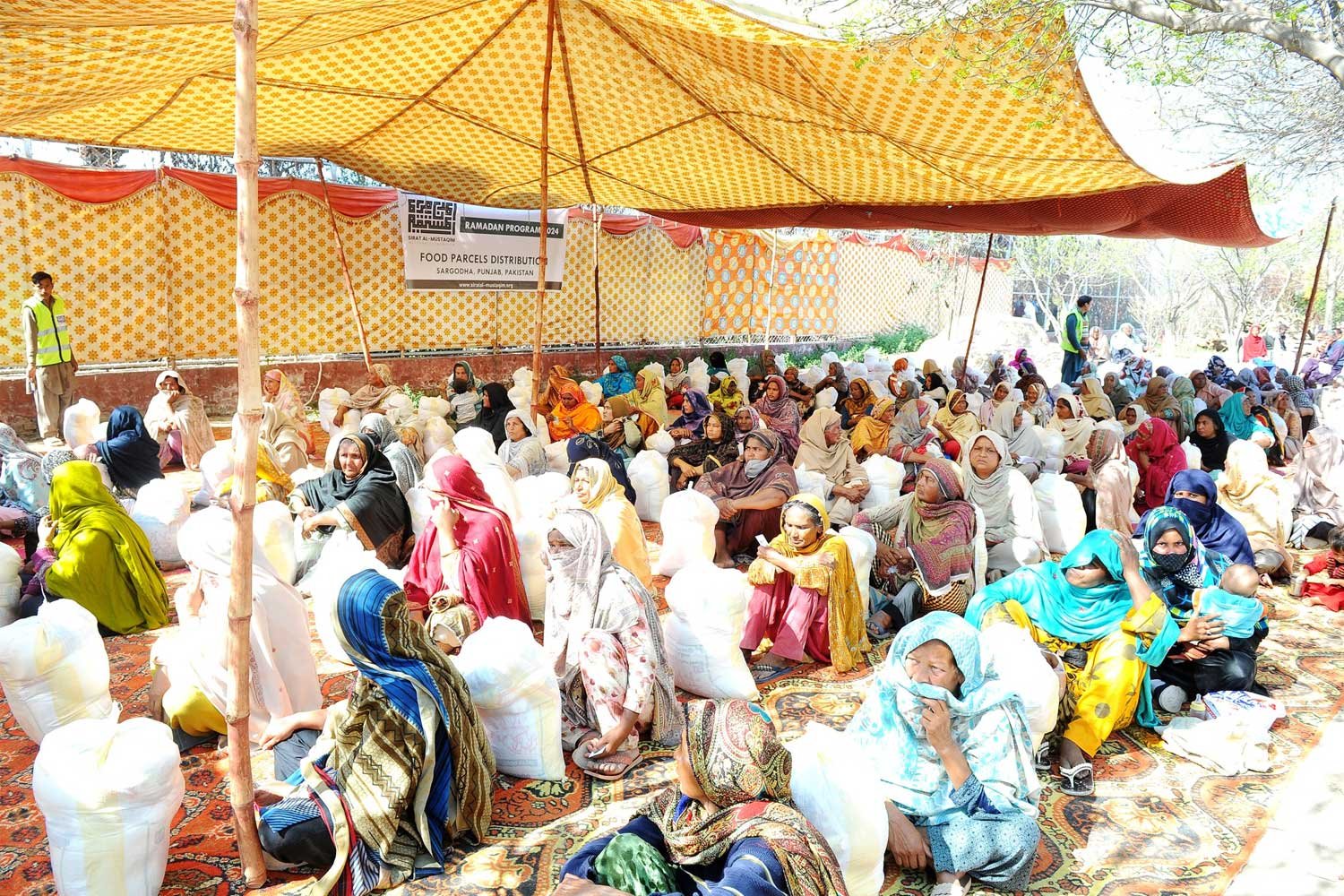
While cooked meals provide immediate relief, the distribution of dry food rations plays a pivotal role in addressing long-term food security. Dry rations, including staples like rice, lentils, and oil, empower families to sustain themselves over an extended period. This approach not only mitigates the immediate effects of hunger but also helps build resilience in the face of ongoing challenges. In this regard, the foundation provides 85 highly food insecure and poverty struck families, consisting of female led households, widows, orphans, elderly and the disabled, with the gift of food security every month in the shape of dry rations.
The combination of livelihood development and skill enhancement emerges as a transformative force to build the resilience of food insecure families in Pakistan. The threads of microfinance, small business grants, and vocational training weave a narrative of empowerment, resilience, and lasting change. Simultaneously, skill development programs equip individuals with marketable skills, fostering independence and broadening employment opportunities. This interconnected approach not only addresses immediate needs but also lays the groundwork for sustainable solutions. At Sirat Al Mustaqim Welfare Foundation, we impart vocational training in the field of garment making to improve food security among female-led households. Moreover, the foundation also provides grants to establish micro-enterprises to eligible families in order to bring them out of the vicious cycle of malnutrition, hunger and poverty.
As we witness the urgency of the food security crisis in Pakistan, the call to action resounds louder than ever. It is not merely a question of sustenance but a matter of dignity, health, and the well-being of entire communities. By supporting initiatives that provide both cooked meals and dry food rations, we extend a lifeline to those in need, ensuring that no one goes to bed hungry.